
Physical Limitations of Antennas, Flutes and Speakers
The miniaturisation of antenna ground planes and speakers is subject to similar physical constraints. Reducing the size of the PCB (ground plane) in relation to the wavelength, especially at low frequencies such as 690 MHz in the USA and Australia, poses considerable challenges.
Analogy: Antennas, Speakers, and Musical Instruments
- Piccolo flute, bass reflex system and real tranmission line: Just as a piccolo flute cannot produce bass tones, antennas and speakers cannot be arbitrarily reduced in size without performance losses.
- Bass reflex and transmission line principle: Speaker manufacturers use bass reflex systems and transmission line to improve the sound of smaller enclosures. This technique allows for more efficient use of available space and enhanced reproduction of low frequencies.
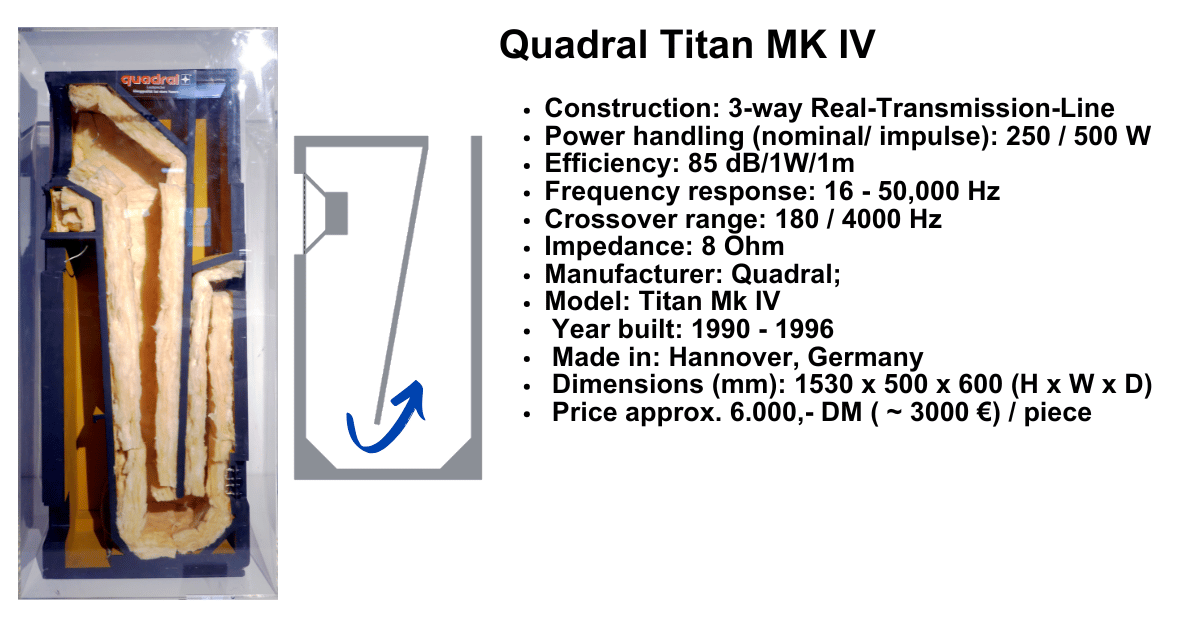
Technical Aspects
- Bass reflex in speakers: Bass reflex enclosures have a defined opening that acts as a Helmholtz resonator, enabling an extension of the frequency range towards lower frequencies. Transmission line loudspeakers have a similar mode of operation to bass refex speakers. These are also characterised by an externally visible sound outlet, but this is usually larger
- Efficiency enhancement: Similar to how bass reflex systems increase efficiency in the bass range for speakers, there are techniques for improving efficiency with smaller ground planes in antennas.
Consequences of Miniaturisation
- Performance losses: Both antennas and speakers suffer from efficiency losses and increased energy consumption when miniaturised too much.
- Complexity and costs: Developing highly efficient small antennas and speakers requires sophisticated techniques, increasing complexity and costs.
Economic Implications
- Rising costs: The development of highly efficient small antennas can cost up to 500,000 €, similar to smartphone antenna development. We have to find a compromise in size and budget of the customer. A compromise cloud be no extra costs on a slidly bigger PCB.
- Complexity and interaction: In compact devices, antennas must harmonise with many other components, further complicating development.
Conclusion
Miniaturising antenna groundplanes and speakers presents developers with similar challenges. Despite innovative techniques like bass reflex systems, there are physical limits that cannot be exceeded without compromises. Developers must carefully balance size, performance, and costs to find optimal solutions. We therefore recommend a kick-off call for small devices in relation to the wavelength to determine the feasibility.
0 Comments