
For a rollout of 5,000 wireless sensors across a large area, a private Low Power Wide Area Network (LPWAN) is often not economically viable. For 39–40 inhabitants per km² (with an area of 1,396–1,399 km²), there is no profit in setting up a separate network. An existing Narrowband IoT (NB IoT) network, as specified by 3GPP for cellular IoT, enables a faster and more cost-efficient path to deployment. The NanoLoop kit from Embever and Antennity supports this approach as a technical proof of concept without requiring completely new base hardware. The kit already combines the nRF9151 M.2 module with Antennity antennas and a Qwiic interface.
Fast Start with an Existing Platform
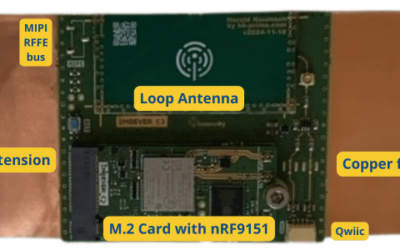
The evaluation setup begins with the NanoLoop printed circuit board (PCB), which provides an M.2 socket for the nRF9151 module, a Qwiic bus for sensor integration, and the integrated PrimeLoop antenna. On the software side, the approach is based on an open Constrained Application Protocol (CoAP) and Datagram Transport Layer Security (DTLS) client for Zephyr, together with Eclipse Californium as the CoAP server. This allows the communication path and backend to be implemented without a proprietary stack.
For developers, this is particularly relevant because the Zephyr CoAP client supports CoAP over DTLS 1.2 with Connection ID. This avoids frequent DTLS handshakes and reduces protocol overhead in NB IoT or LTE M operation. The repository describes the communication as reliable, efficient, and end-to-end encrypted.

Sensor Integration and Firmware Extension
In the first prototype, the sensor provides an analogue output signal. This signal is digitised via an external analogue-to-digital converter (ADC) connected to the Qwiic bus. The open source firmware is then extended to control this converter. A cyclic timer event reads the sensor, for example, every 15 minutes, stores the values locally, and decouples measurement from radio transmission.
A second event aggregates the collected data and sends it once per day via a CoAP uplink to the server. This reduces radio activity, energy consumption, and network signalling. According to the project documentation, the server can be deployed using Eclipse Californium and can directly receive client messages.
Mature Open Source Components
The Zephyr CoAP client is a publicly available repository that has existed since 2022 and is documented through GitHub releases up to August 2024. Eclipse Californium is also an established open source CoAP and DTLS project that is actively maintained.
According to the client description, a test device achieved 256 days of continuous operation. In the documented example, after 257 days and around 6,150 messages, an error rate of approximately 1 % is reported. These results support the conclusion that the stack is suitable for long-term testing. A precise formulation is that stable uplink communication was demonstrated under documented long-term conditions, rather than claiming the complete absence of failures.
From Evaluation Setup to Target Hardware
Once the evaluation setup is validated, the NanoLoop concept is transferred into a custom PCB to reduce component count, cost, and assembly effort. At this stage, the external ADC can be removed. Instead, an internal ADC of the nRF9151 is used. The circuit is also adapted to the final sensor mechanics and energy budget.
The integrated PrimeLoop antenna serves as a broadband and readily available reference solution during evaluation. For the target application, it is replaced for technical reasons. The sensor is intended to be installed inside a metal tube, which significantly changes the electromagnetic boundary conditions compared to an open evaluation board.
Antenna Transition to FreeTrack
For this installation scenario, the antenna is redesigned as a customised FreeTrack structure, adapted for Band 20 and Band 8. Antennity describes the FreeTrack, FreeLoop, and FreePatch families as part of a licence-free antenna community. The company provides 80 pages of freely available content on PCB track antennas.
This is relevant for developers because it enables not only the integration of an antenna directly into the device PCB, but also access to essential RF design knowledge. As a result, an expensive external antenna can be avoided in the final product, and manual integration effort in production is reduced.
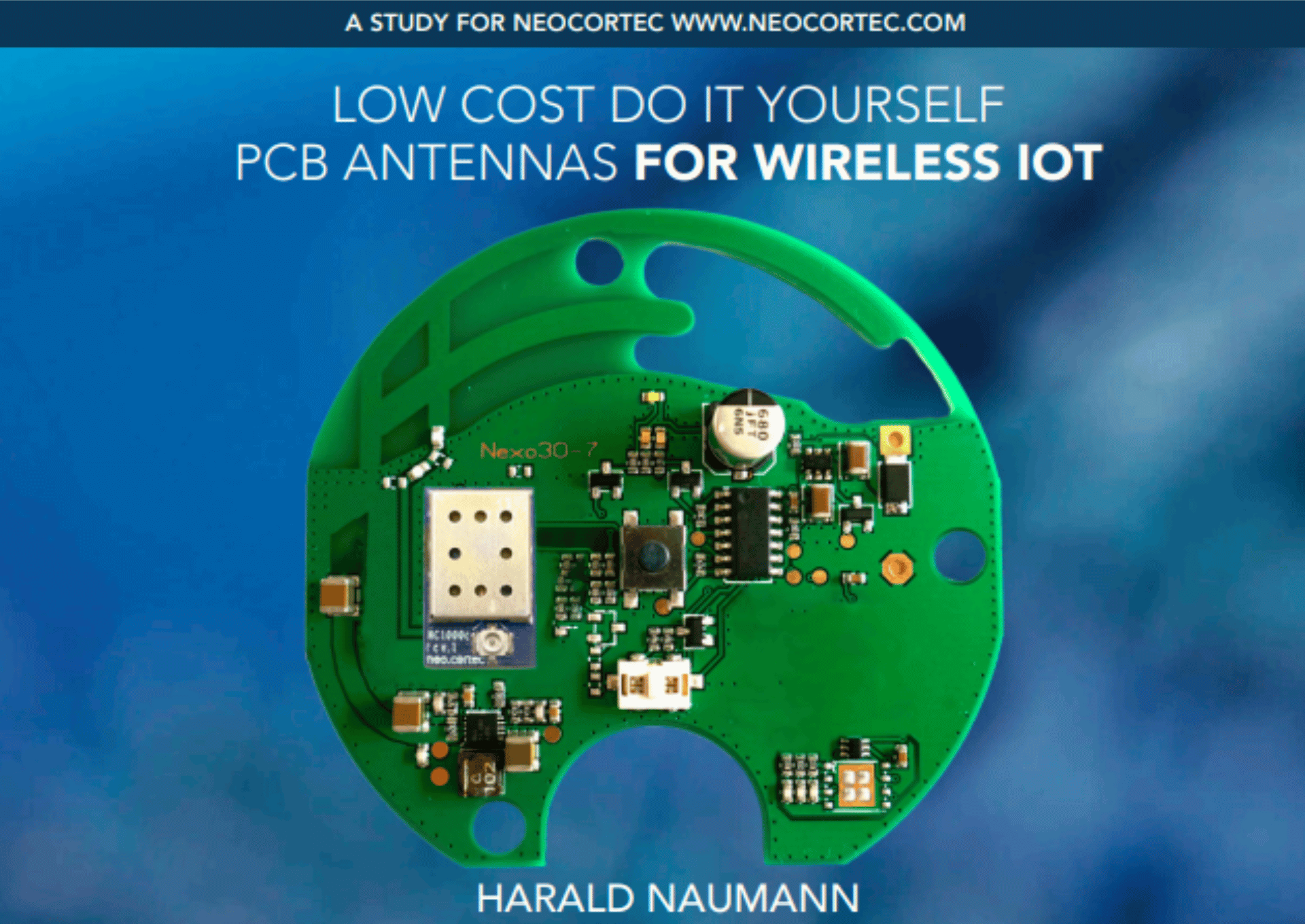
Low-Cost-PCB-antanna

IFA-antenna-868-915-MHz
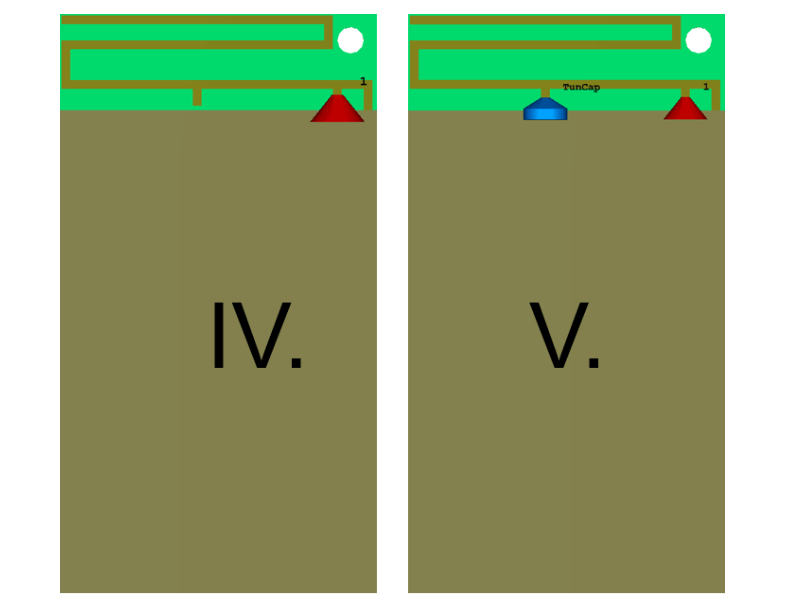
S-IFA_antenna
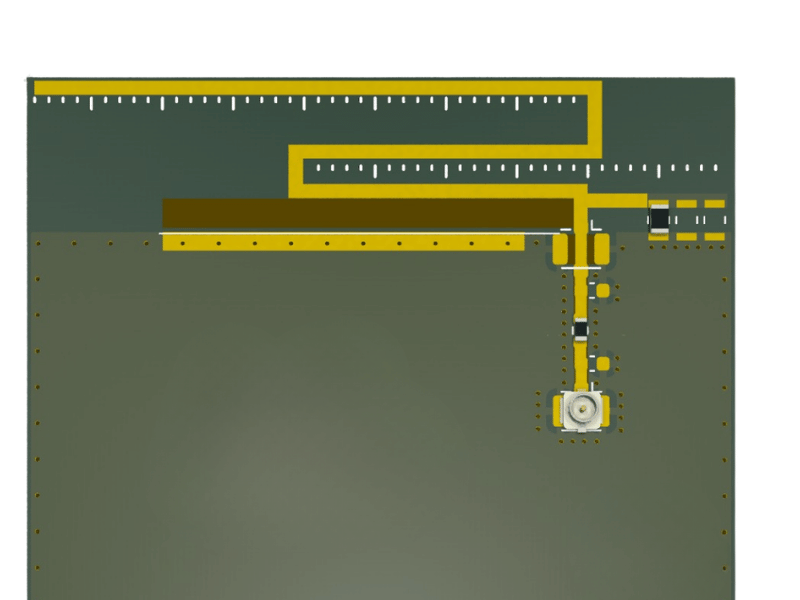
S-IFA-antenna
Outcome for Product Development
The result is a compact PCB that integrates the nRF9151, sensor interface, and a customised PCB antenna tailored to the real installation environment. The key value lies not only in hardware integration but in the combination of an existing NB IoT network, reusable open source software, and a clear migration path from evaluation kit to production hardware.
This creates a development process that significantly shortens the path from LPWAN concept to final sensor and reduces costs in RF design, mechanics, and system integration.
References
Antennity; Embever: NanoLoop Kit, Antennity, URL: https://antennity.com/5g-ntn-lrfhss-lora-evaluation/ .
Boaks: Zephyr CoAPS Client Repository, GitHub, URL: https://github.com/boaks/zephyr-coaps-client .
Boaks: Zephyr CoAPS Client Documentation, GitHub, URL: https://github.com/boaks/zephyr-coaps-client .
Eclipse Foundation: Californium CoAP Framework, GitHub, URL: https://github.com/eclipse-californium/californium .
Eclipse Foundation: Californium Project Overview, GitHub, URL: https://github.com/eclipse-californium/californium .
Naumann, Antennity: PCB Track Antenna ( FreeTrack concept) URL: https://antennity.com/pcb-antenna-dl/ .
Why Antennity?
Antennity stands for antenna + infinity — the endless possibilities of open design.
Ourantennas adapt to every environment — as PCB, flex PCB, or LDS. Combined with our open bus architecture, they form a limitless innovation platform.
Schematics and CoAP code are open.
Antennity supports all Nordic Semiconductor evaluation kits.
💡 Antennity is the Linux of antennas — open, powerful, and built for collaboration.
Let’s Build Together
We welcome enquiries for consulting, design support, training, and white papers.
Be part of Europe’s NTN revolution — and make your IoT device truly global.
Contact us today to start your IoT journey.
0 Comments